All About ShowersAdded : Thursday at 10:15 So, a couple of days of some impressive showers across the UK as an Arctic airmass moves South. Meteorologists love showers, apart from the one in the gym which takes two minutes to warm up and then when it reaches the right temperature it turns off for some reason?!
But showers are little microsystems, ones which can show you how thermodynamics works in the atmosphere. Hopefully, after reading this discussion, you will never utter a naughty word if caught in a shower again....
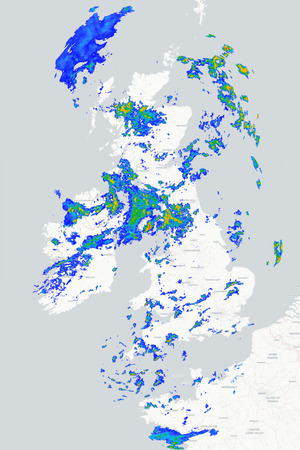
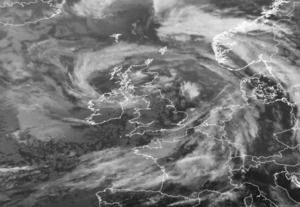
Showers are all about temperature imbalance. You can see today we have a plethora of them developing inland this afternoon :-
![]()
Now, look at the same chart for the temperature at 2m above ground, notice how they are cooler in the showers (obvious, but we will come back to why in a bit...)
![]()
Now look at the gust wind speed, notice how they develop in the same pattern as the showers :-
![]()
Showers develop when the atmosphere is unstable, warmer air rises which in turn condenses into cloud, the movement within the showers coalesce the water vapour molecules which bump into each other, increase in size and then you get rain. You can replicate the same thing on a pane of glass with droplets on, tap the glass and the drops will merge into large enough droplets to run down... rain drops!
Obviously, in the upper levels of the shower clouds we have colder temperatures, this can mean the water vapour turns to snow or ice as it moves up. The rising air within the showers creates a buoyancy which suspends these droplets which then move up and down depending on the strength of the updraught. If ice falls into water vapour then a new layer is added, which we call accretion, then the ice goes up again, freezes and continues this process until it's too heavy to be suspended, we call this hail.
Again, you can do this at home tonight if you want? Get a frozen chip from the freezer and dip it water and then put it back in the freezer for a few minutes, keep doing that for an hour or two and you can create your own hail chip!
Back to the wind now and when a shower approaches you, you will notice the wind picking up from the opposite direction. This is the warm inflow which is created by cooler air blowing down around the shower moving along the surface and warmer air is drawn in to rise above it.
Then, the winds will turn around as the cooler downdraught from the shower reaches you. This is the point to put your brolly up as rain will start soon.
Then, the shower moves across and the wind drops. If you have a sensitive barometer, then you'll even see a slight rise within the shower as the cooler air descends to the surface.
You'll also notice the temperature dropping in the shower, this isn't just down to descending air, but the rainfall hits the ground and starts to evaporate. This process causes latent heat release and the energy required for this in turn draws energy from warmer air or surfaces, hence the temperature drops in showers quickly.
Once the showers moves across, we then see the main downdraught of the shower, this is where hail will occur, so hail always falls on the rear of a shower cloud and you'll also notice the wind picking up once more.
Then, the sun comes out and incy wincy spider crawls back up the pipe again...
So there you have it, the cycle of a shower as it moves across your area. Next time you are caught in a shower say "this is amazing, the incredible process of thermodynamics!"
You'll get some strange looks, but mother nature will give you a nod of approval...
METEOROLOGIST : MARSH |



 Good evening. Another dry day here and the soil is turning back to dust so I hope we get s...
 Evening all,
A fair day today, lots of cloud earlier which has slowly cleared to leave so...
Evening all,
A fair day today, lots of cloud earlier which has slowly cleared to leave so...